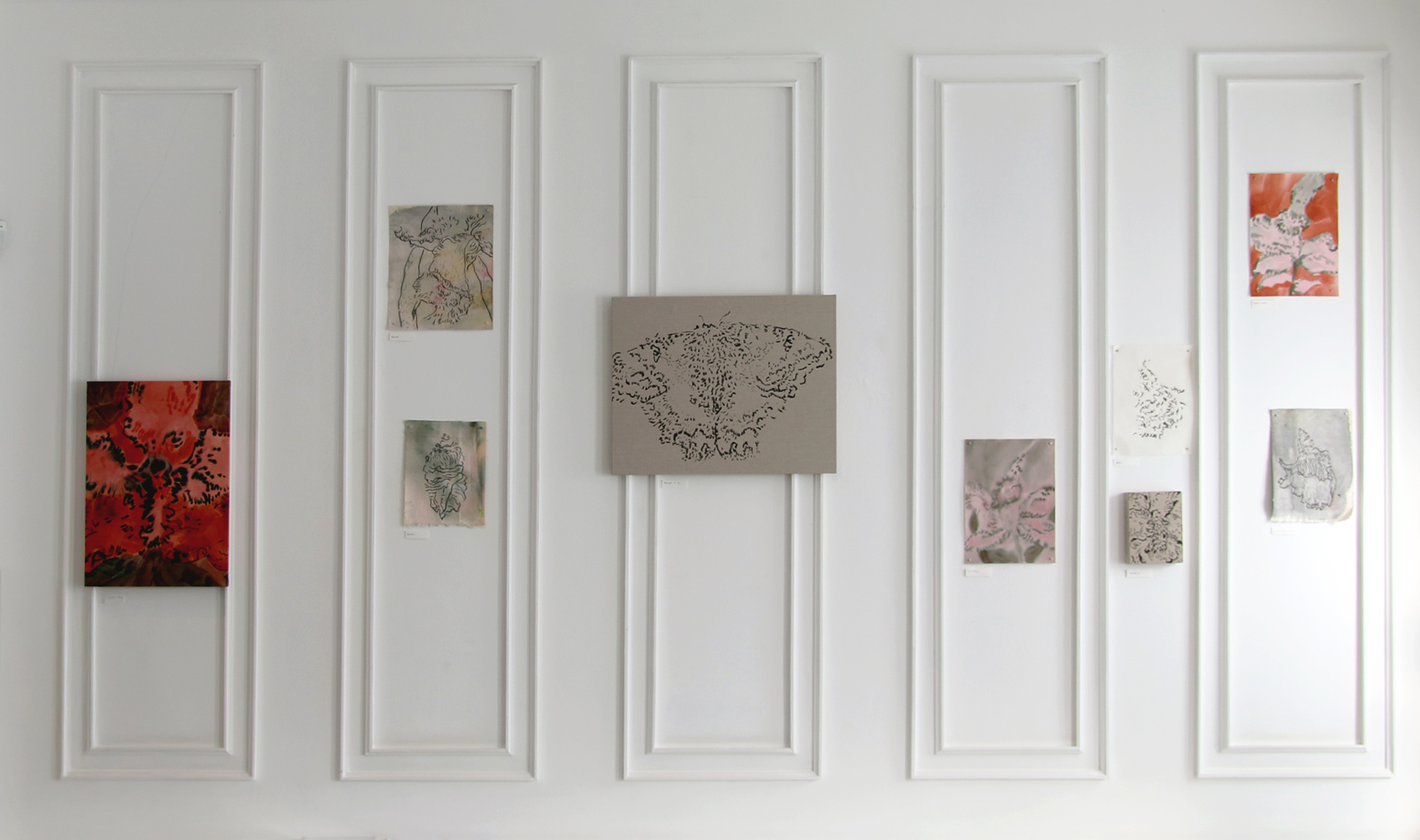
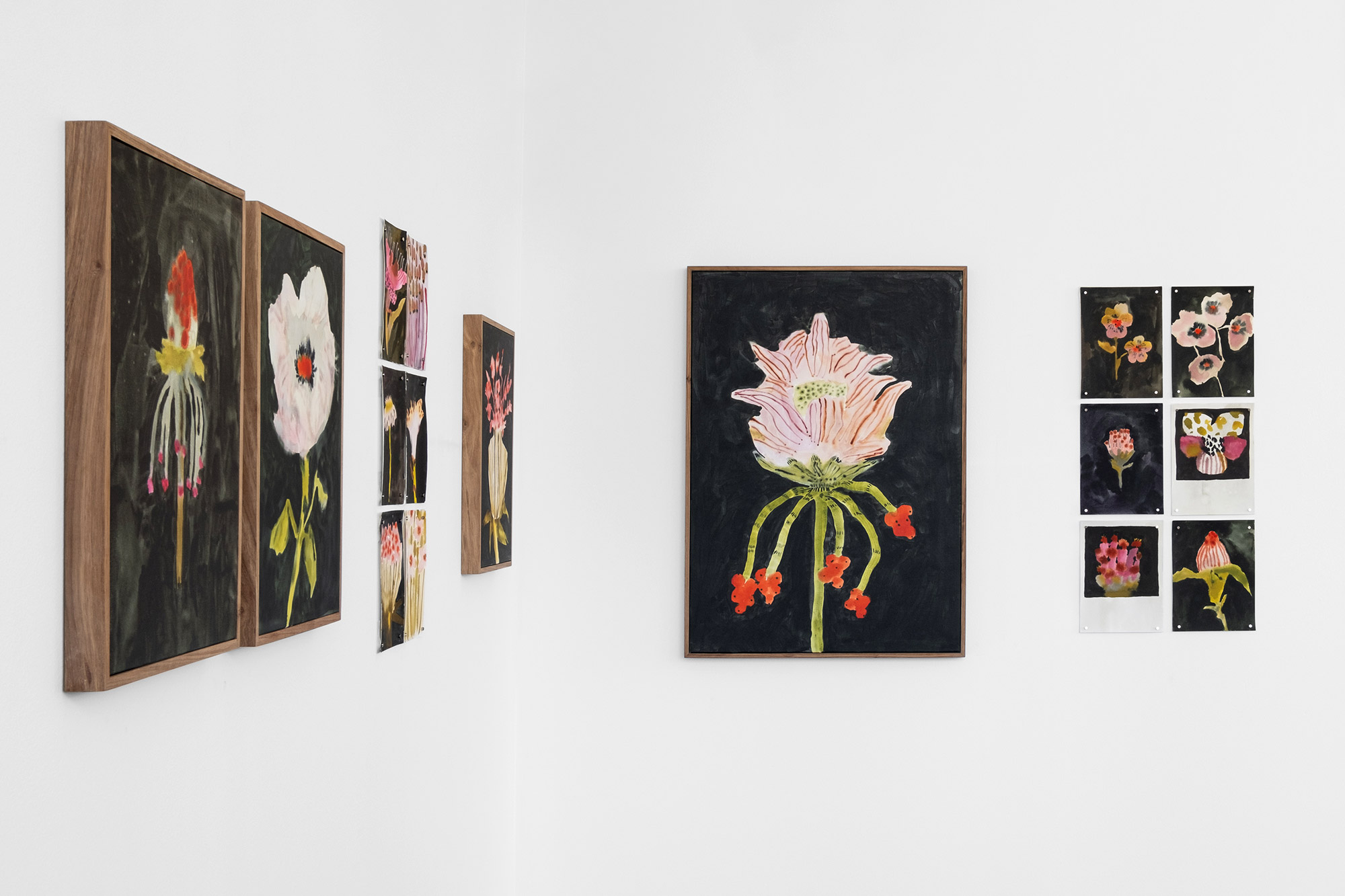
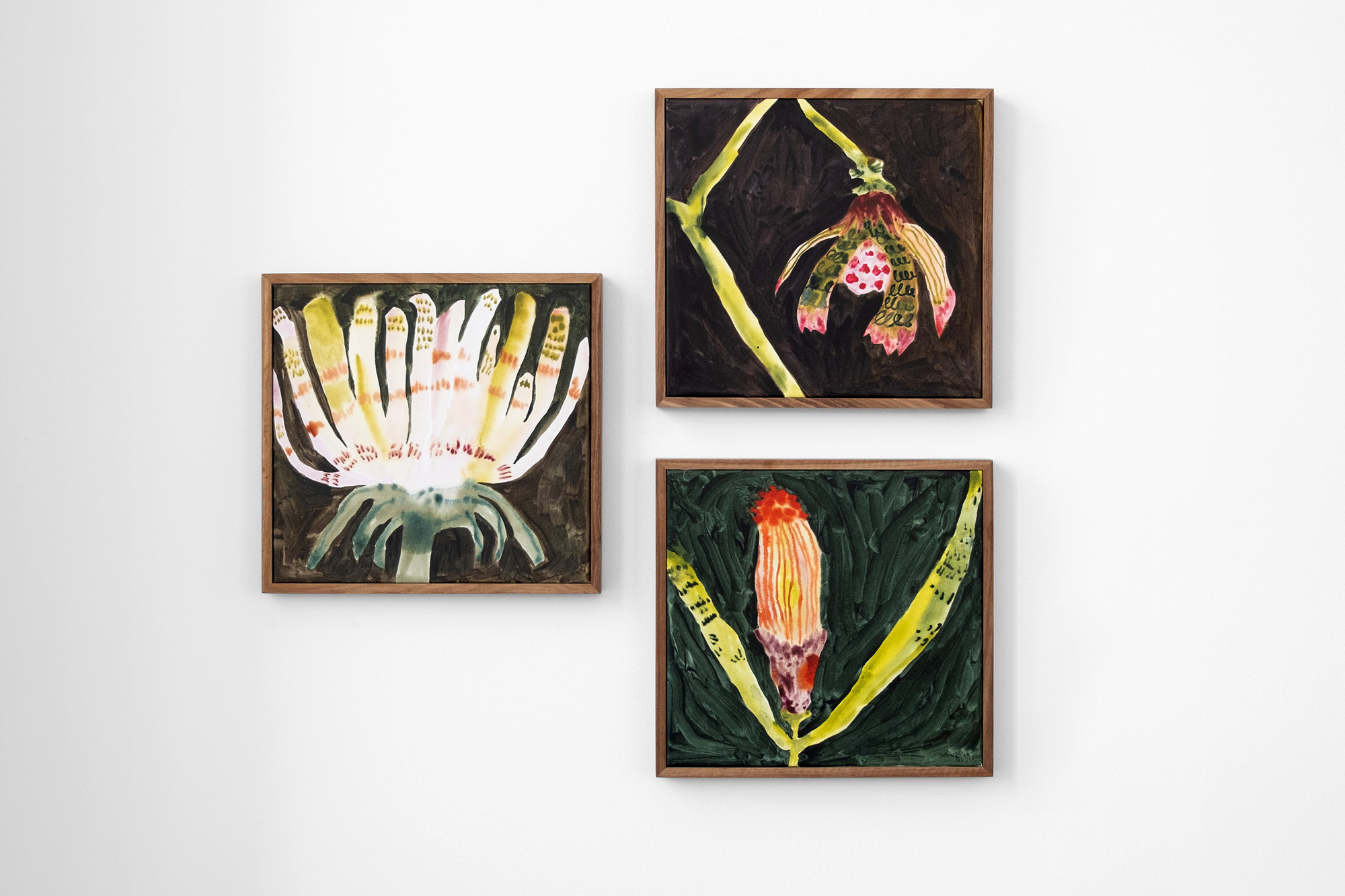
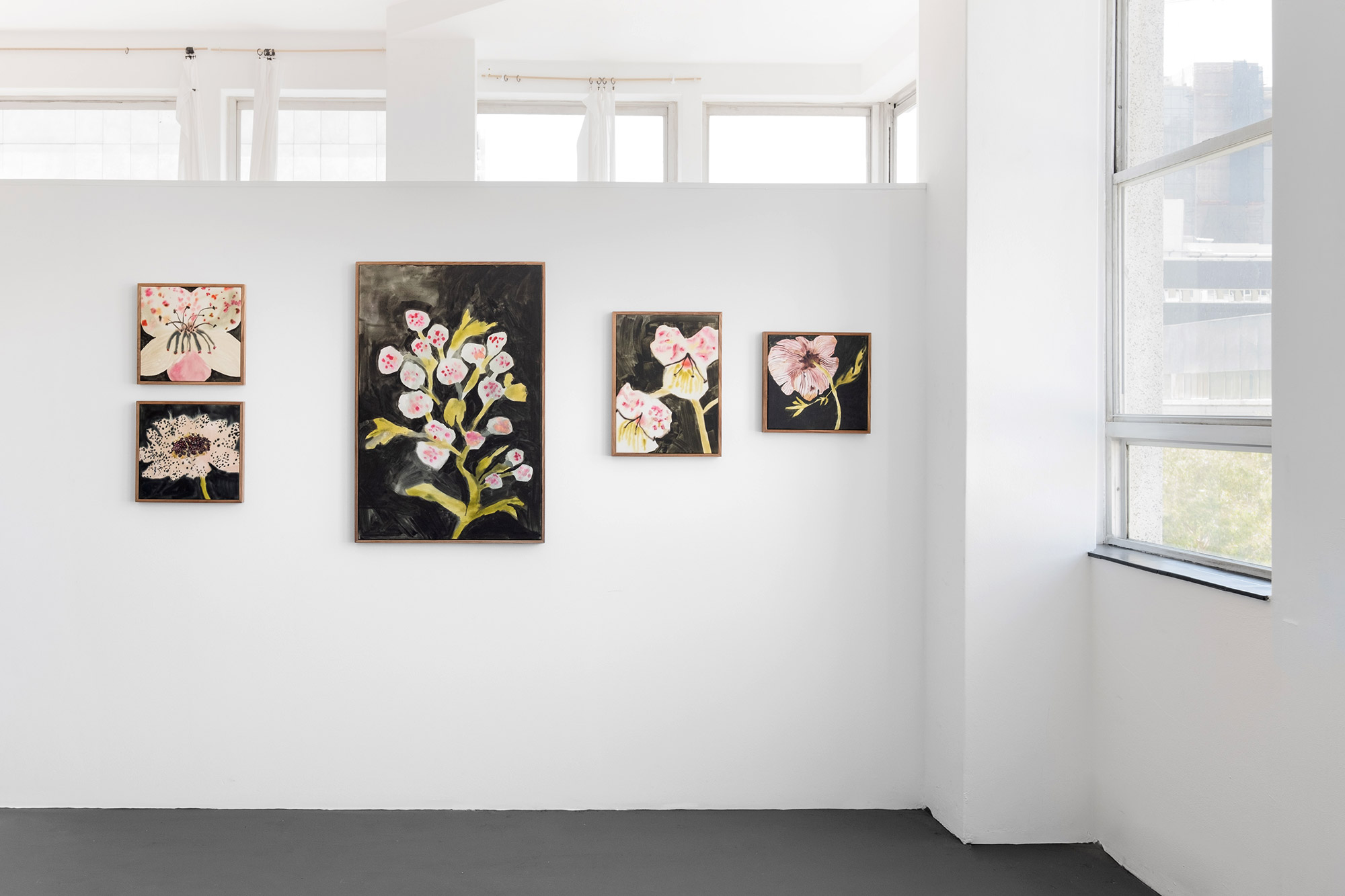
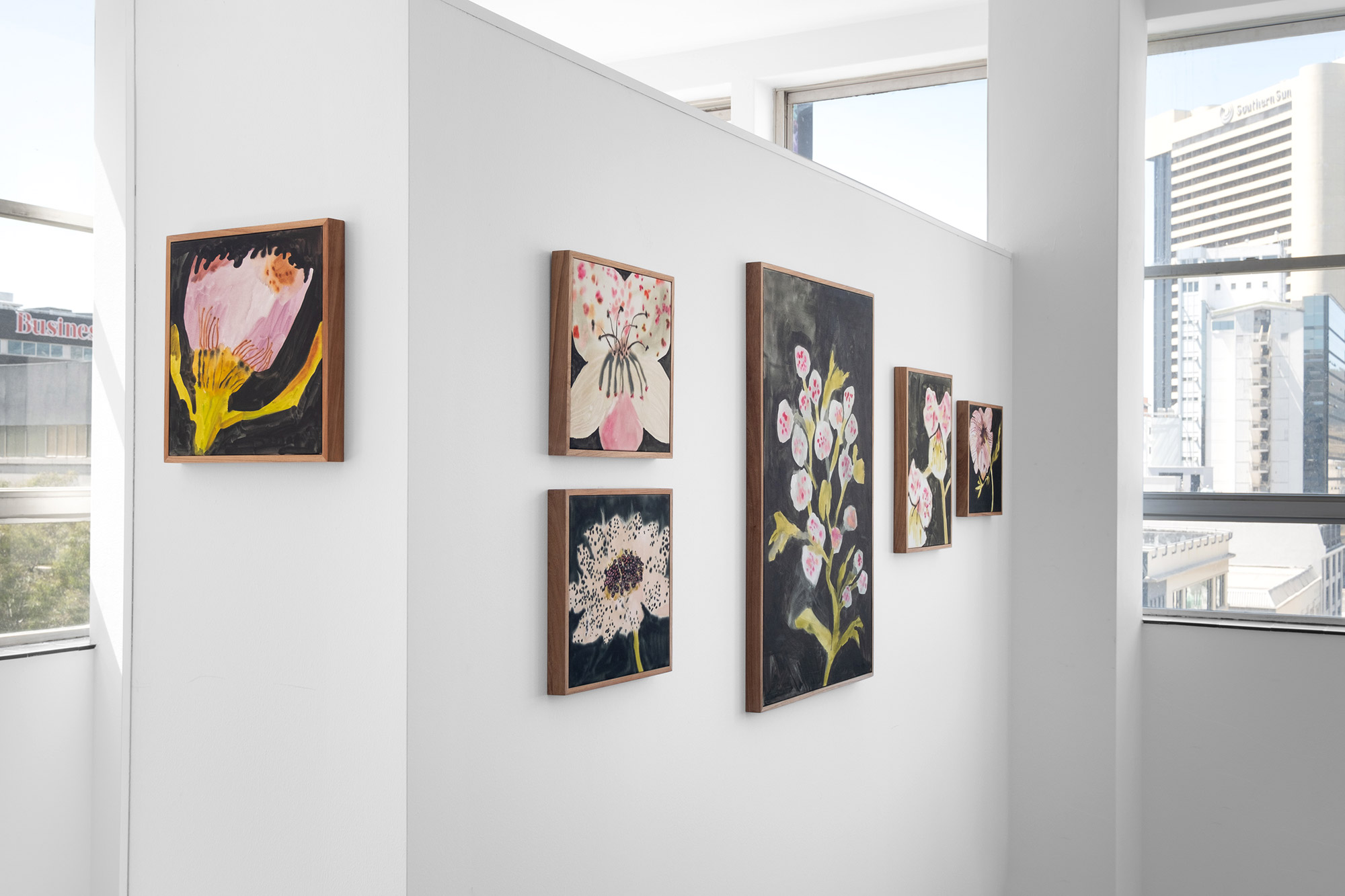
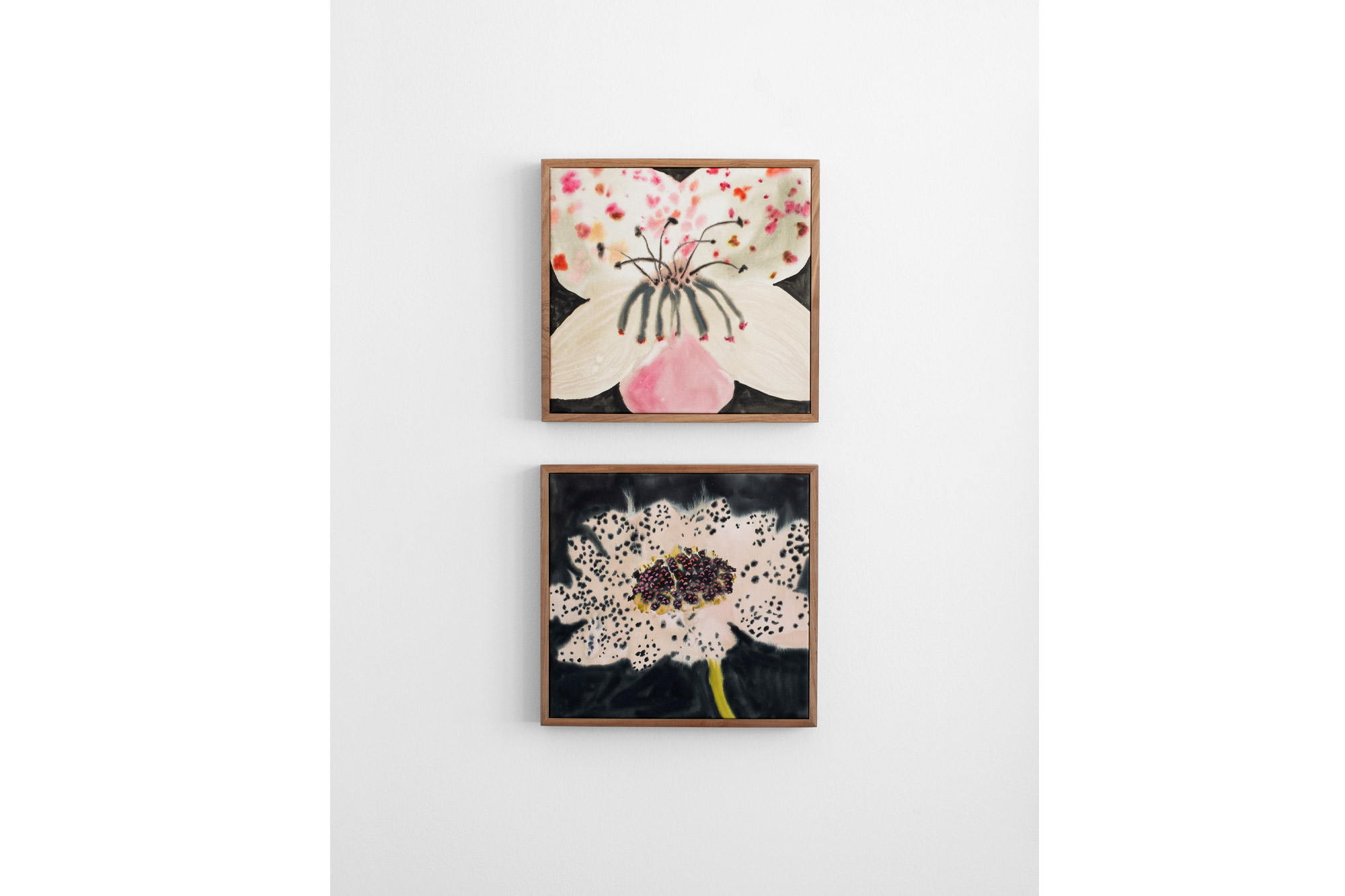
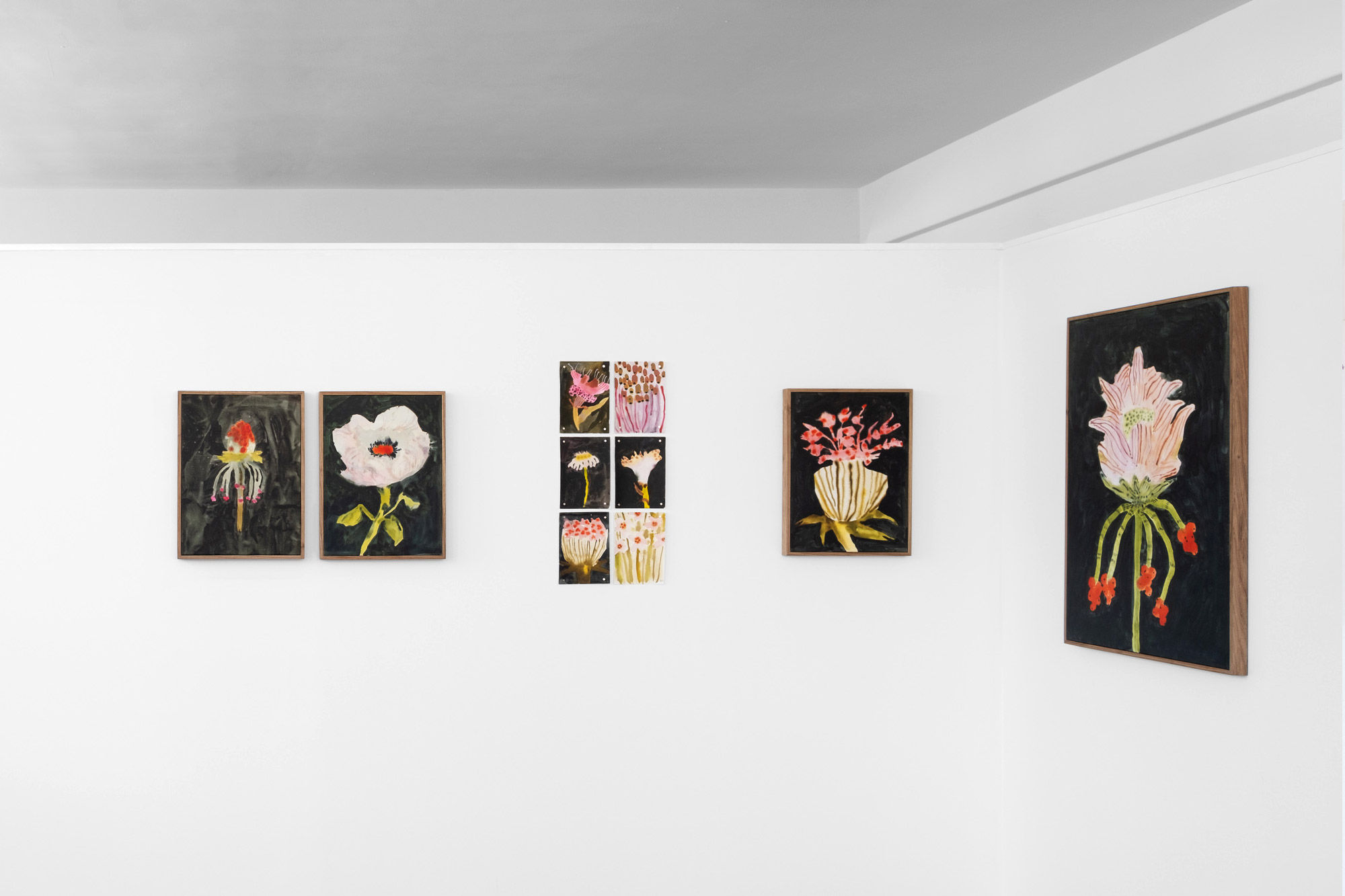
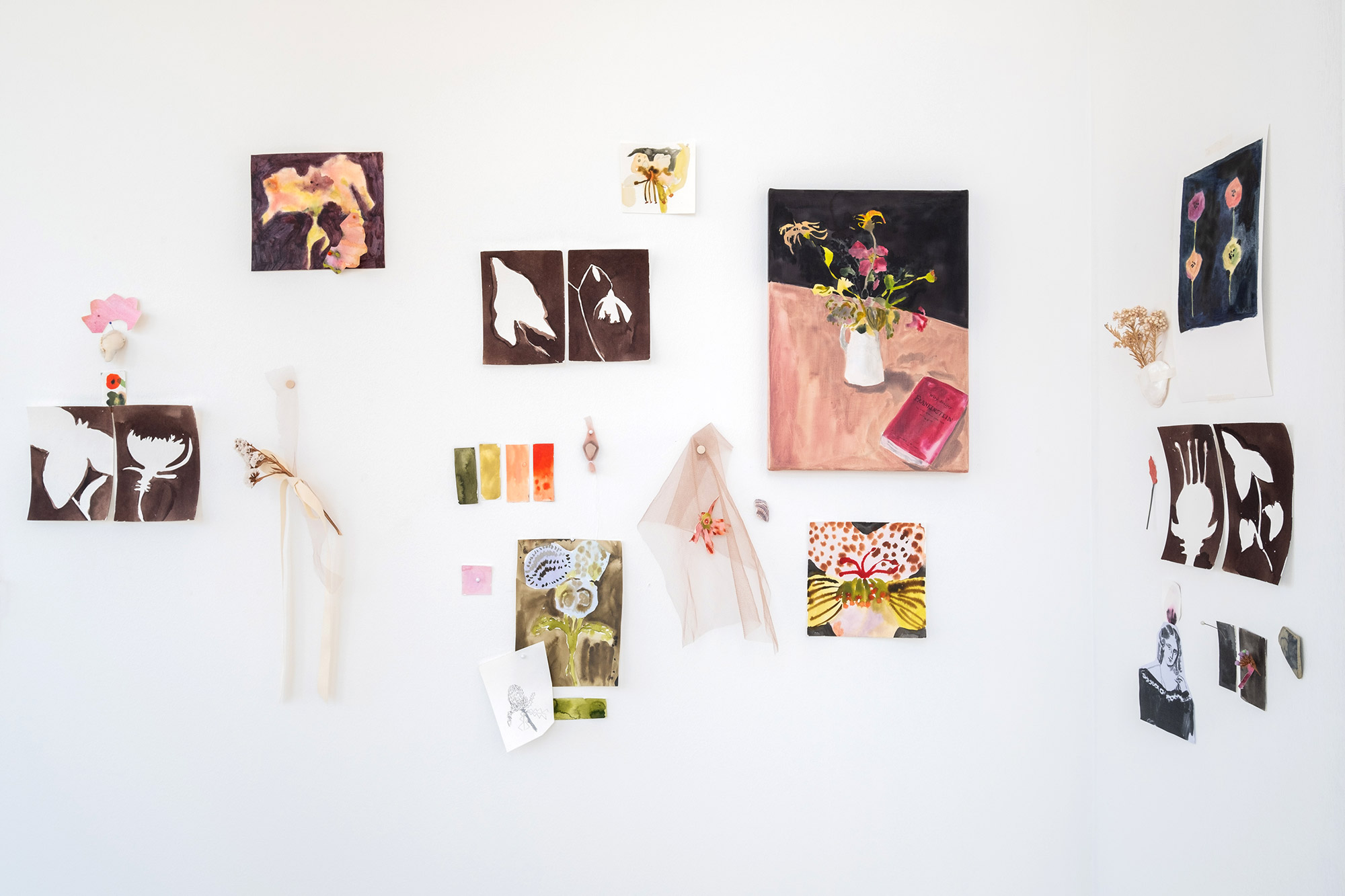
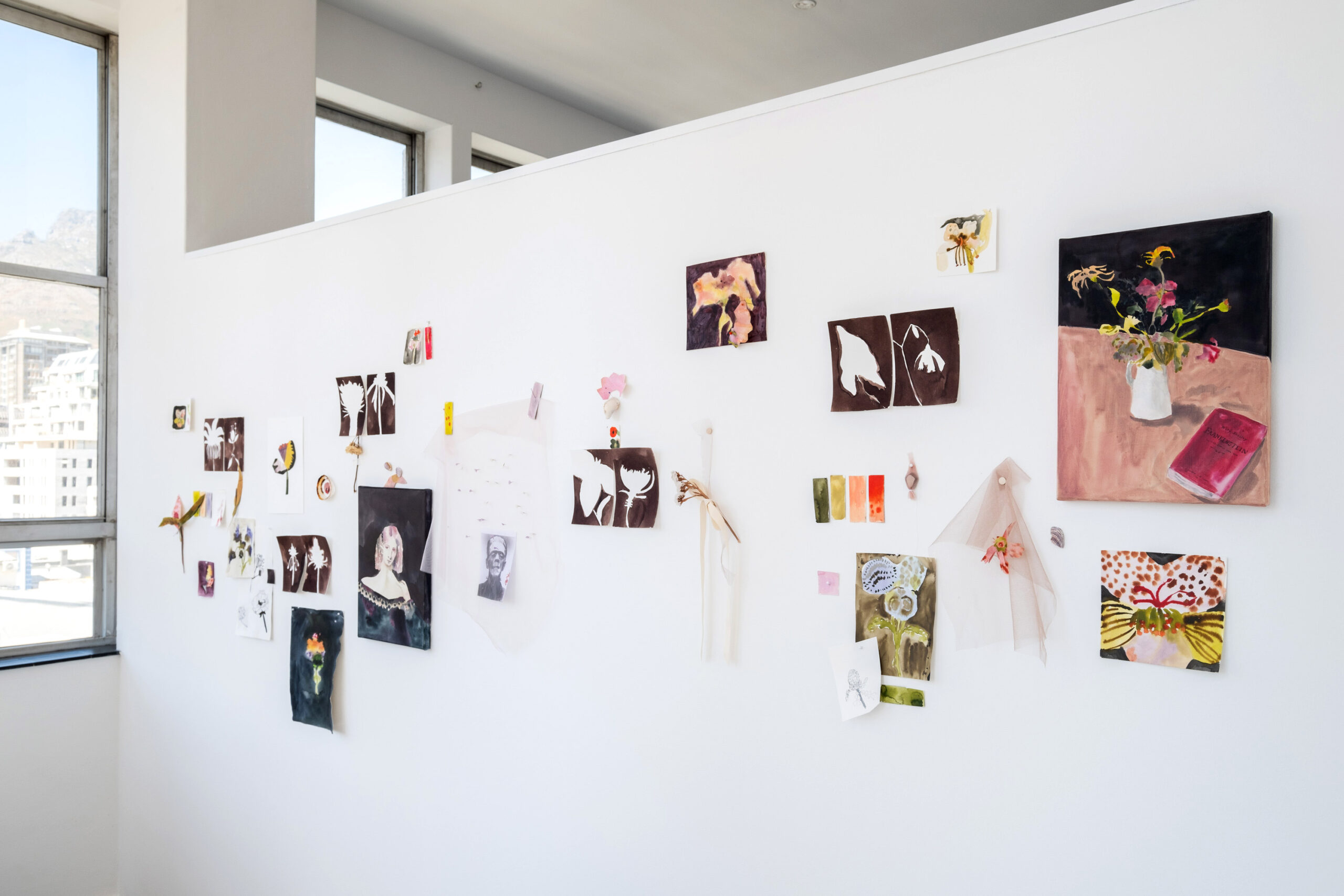
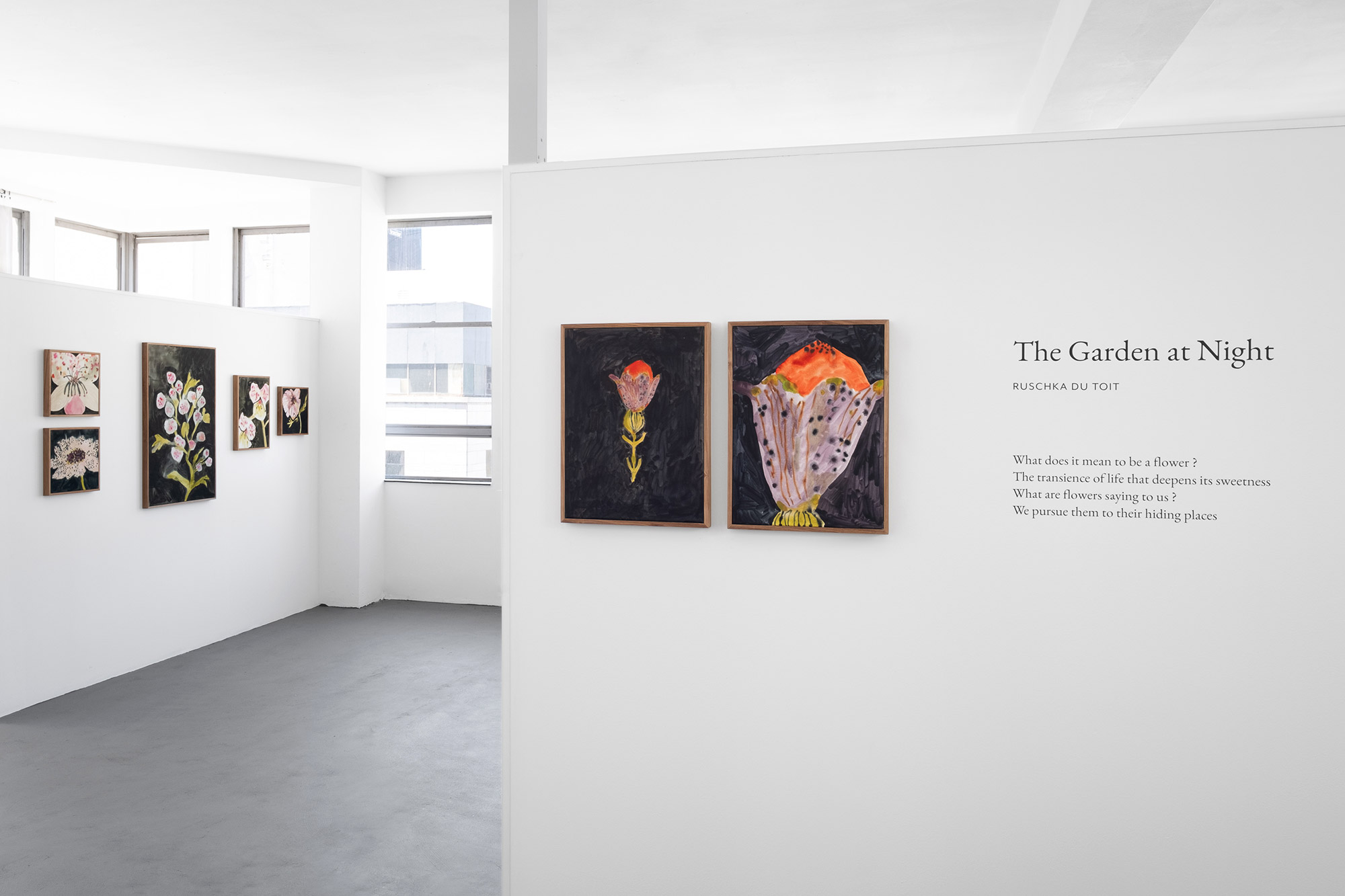
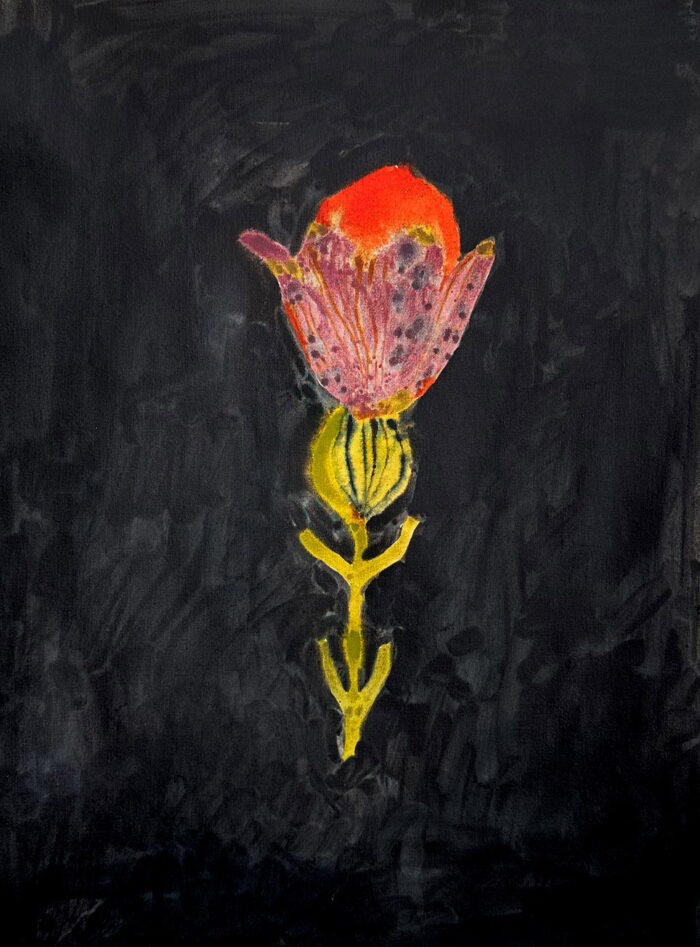
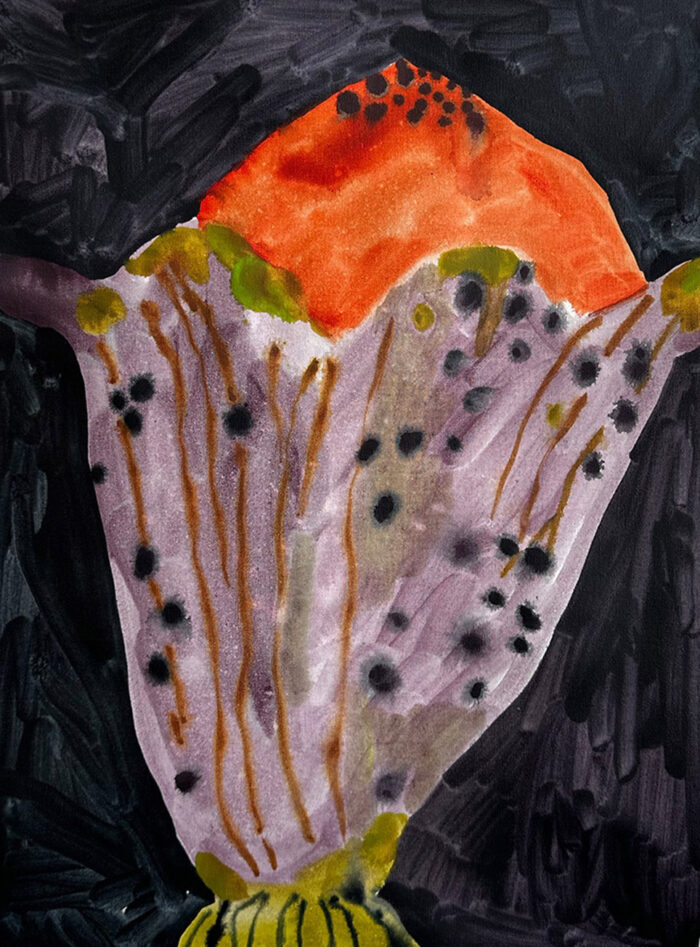
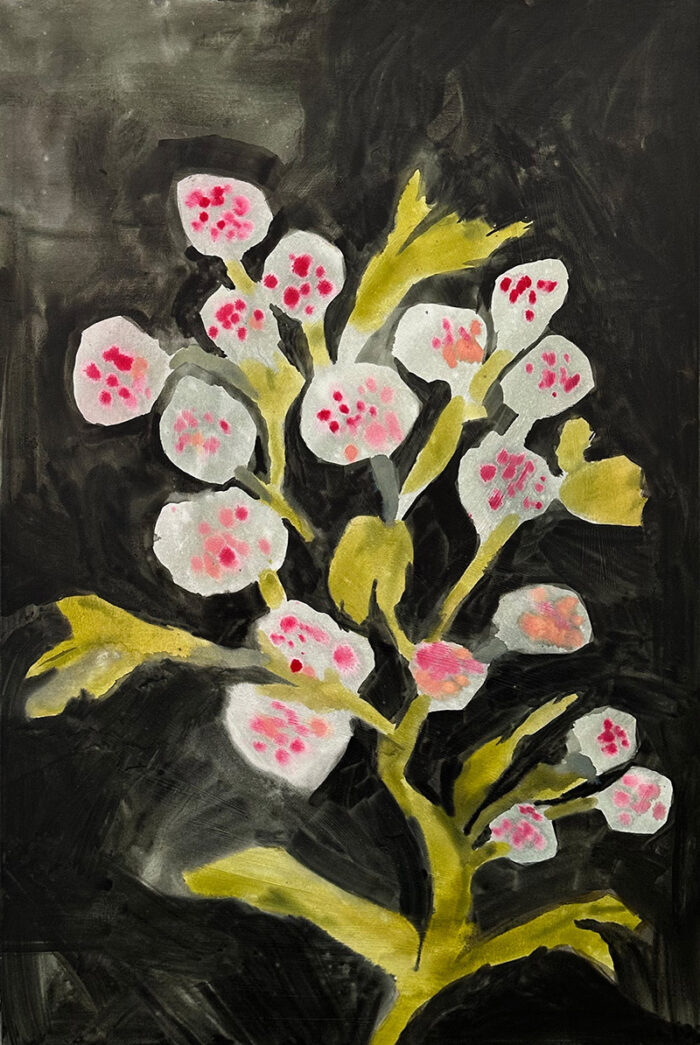
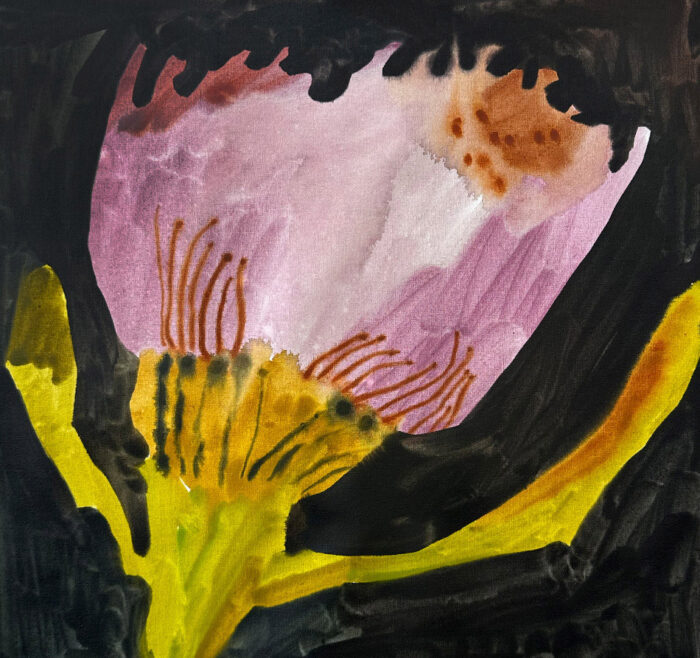
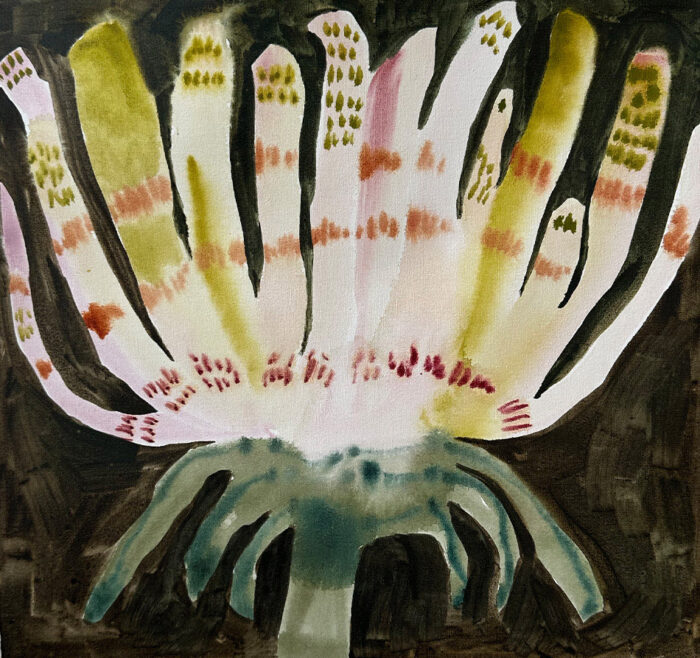
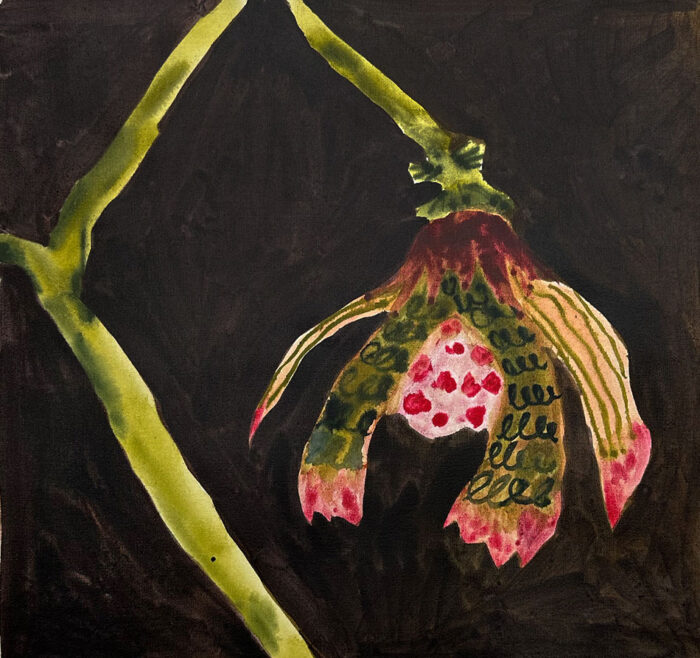
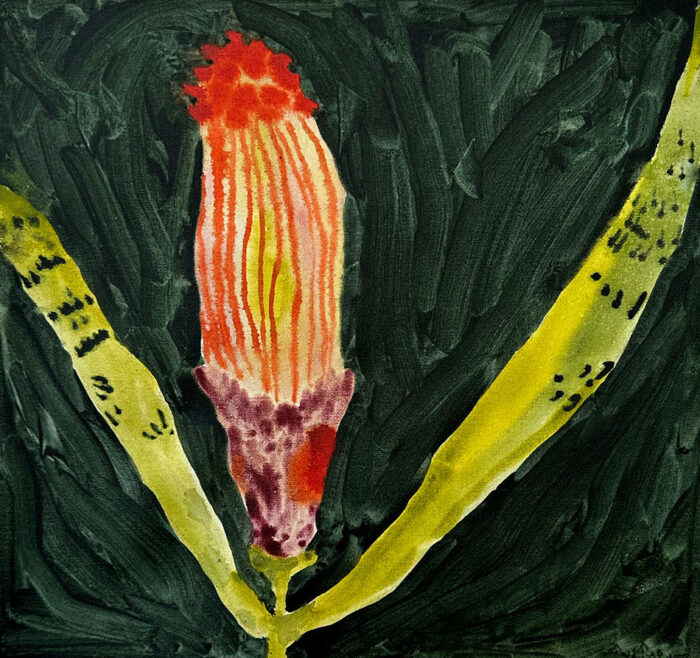
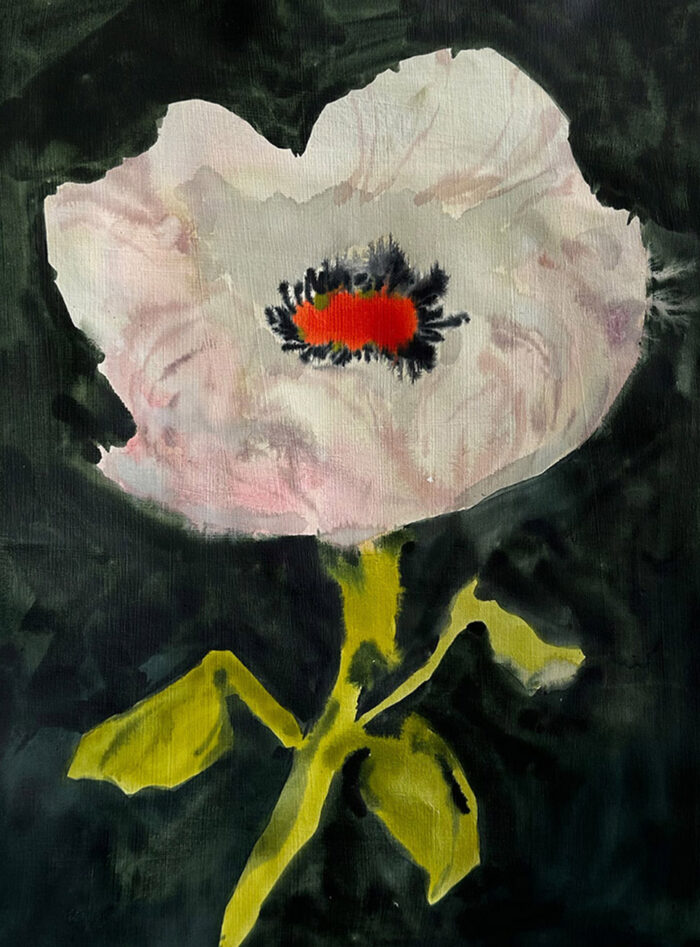
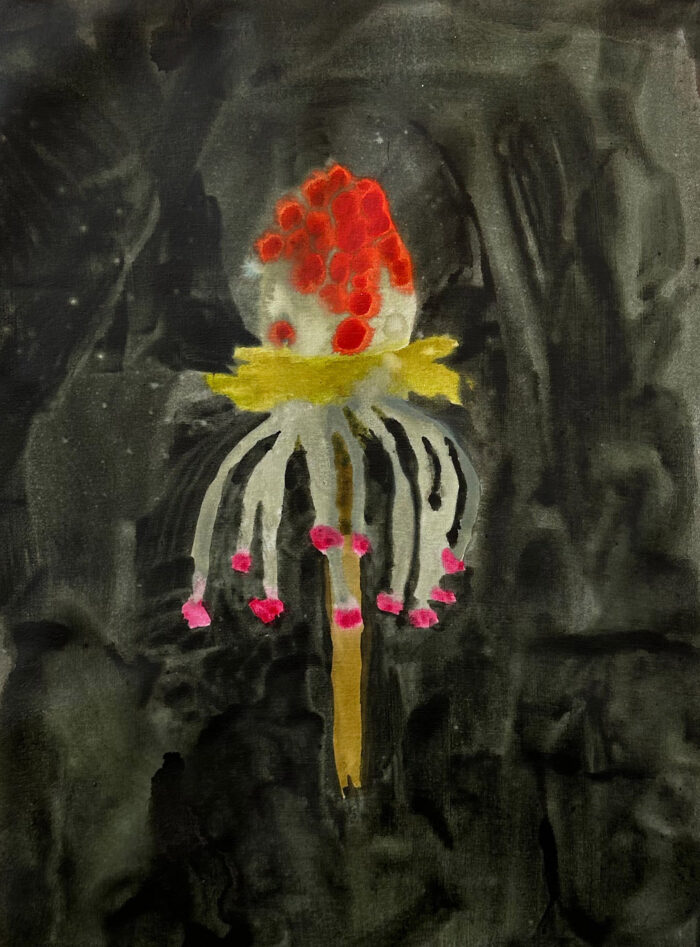
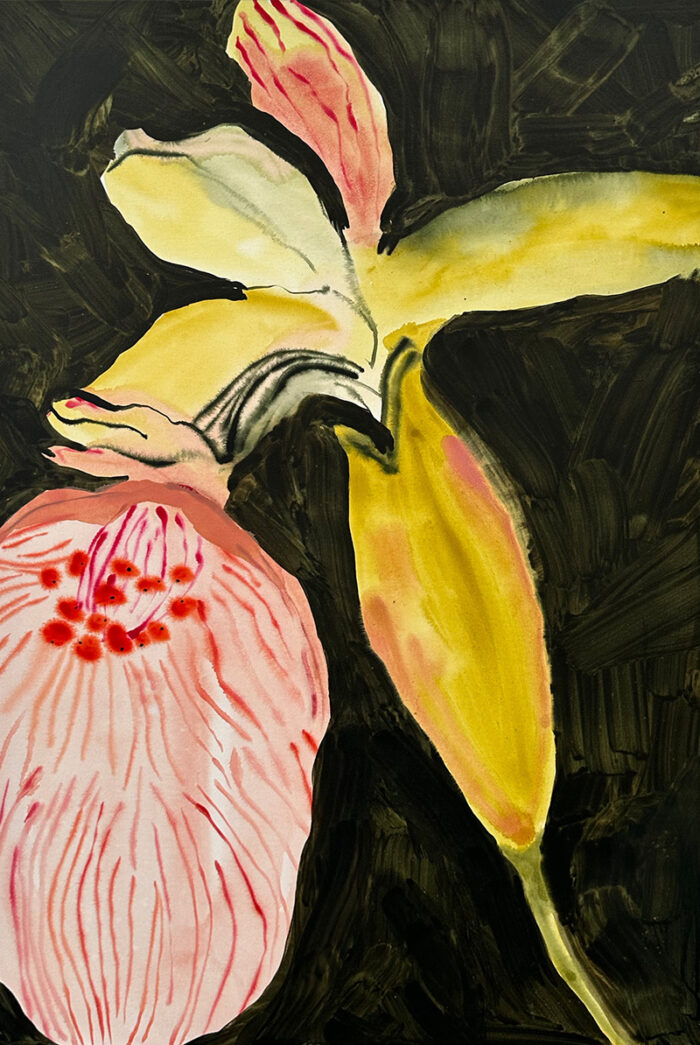
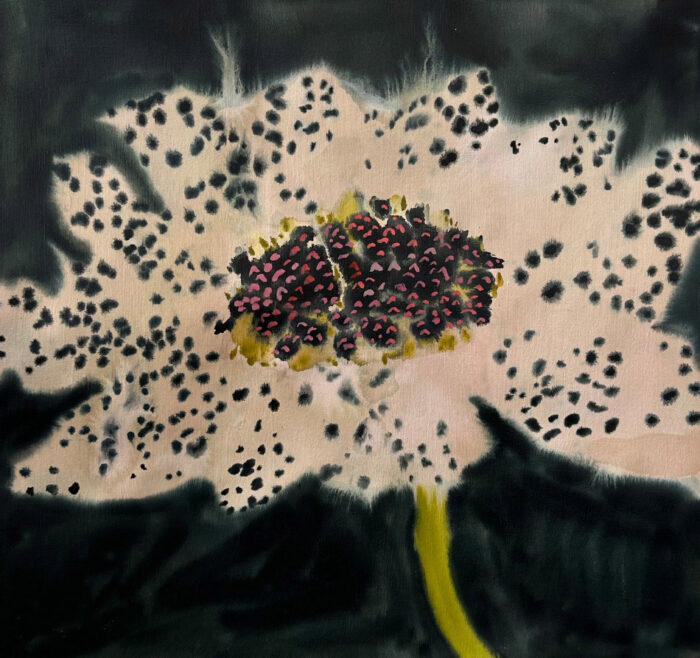
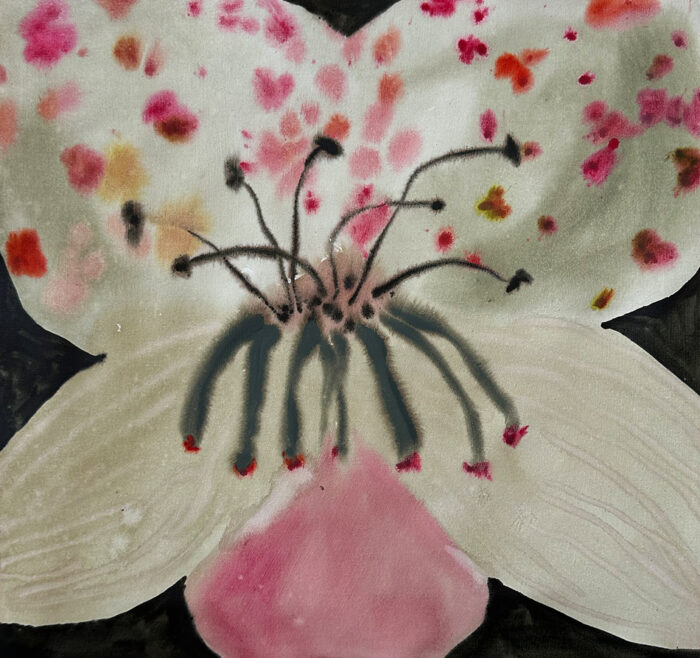
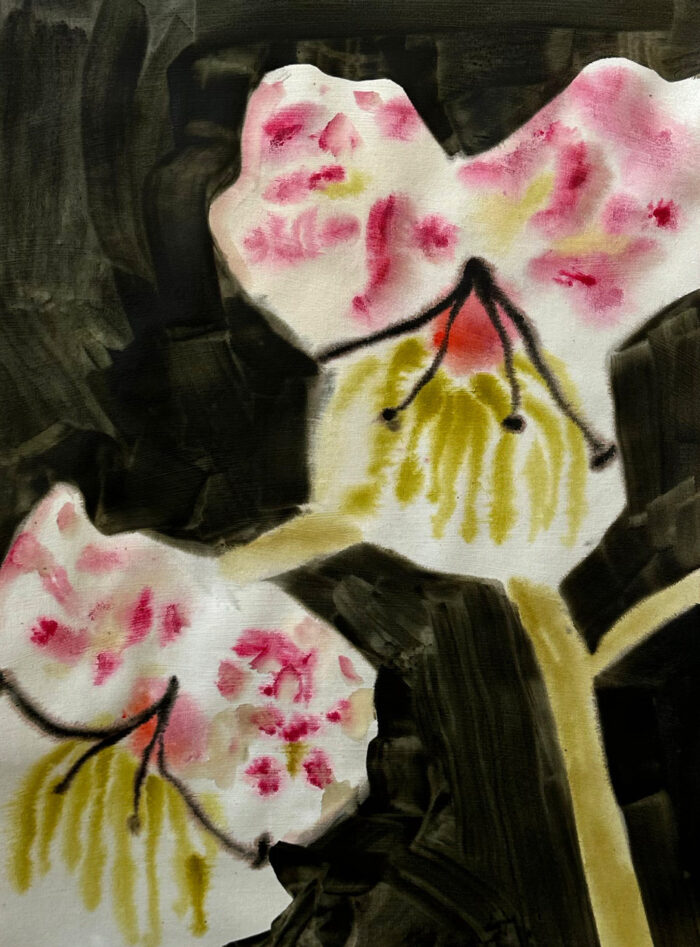
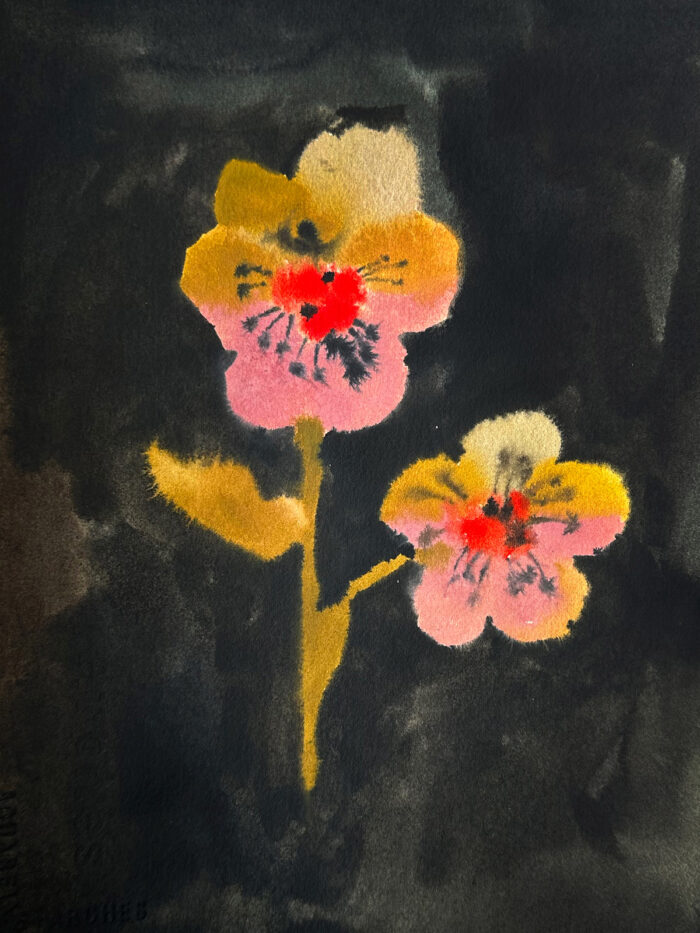
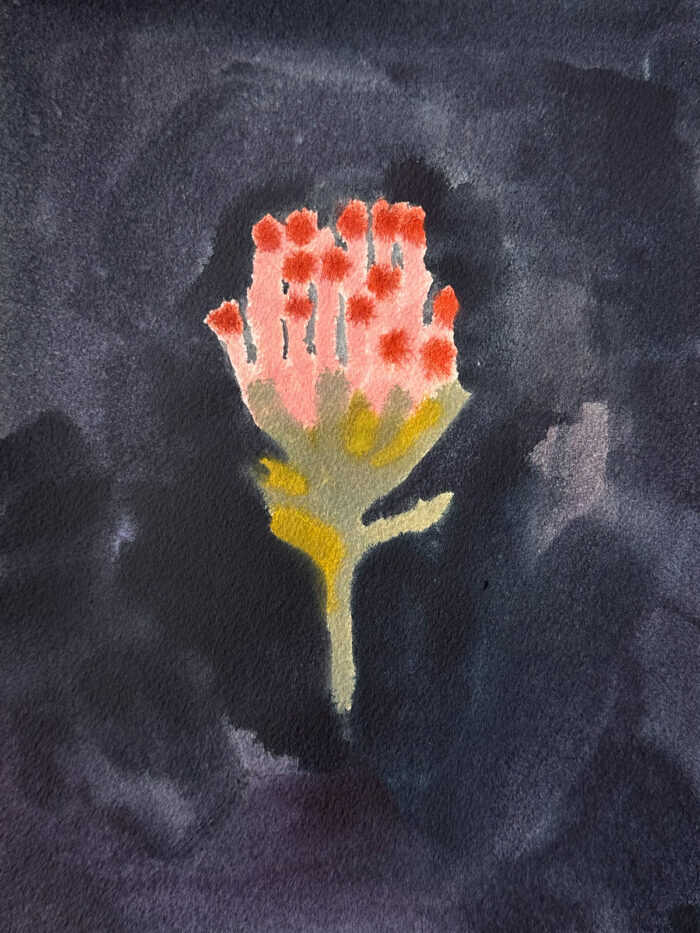
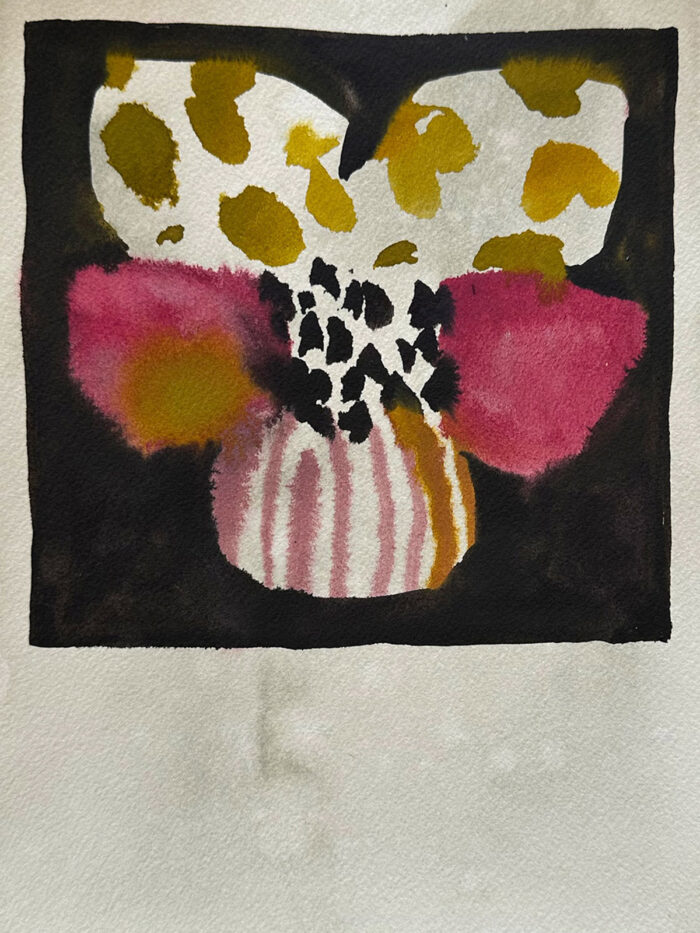
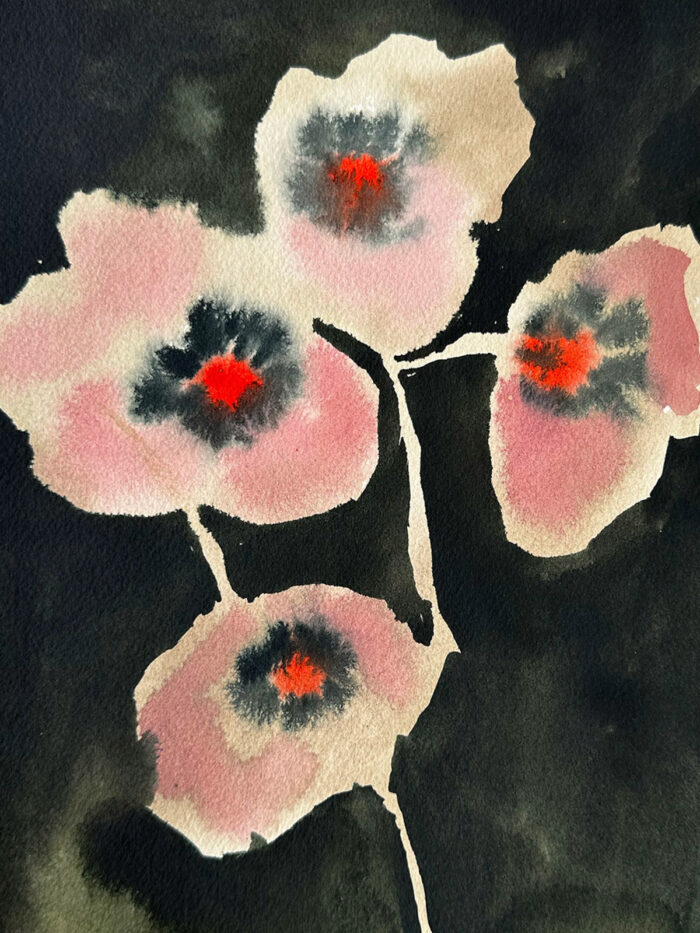
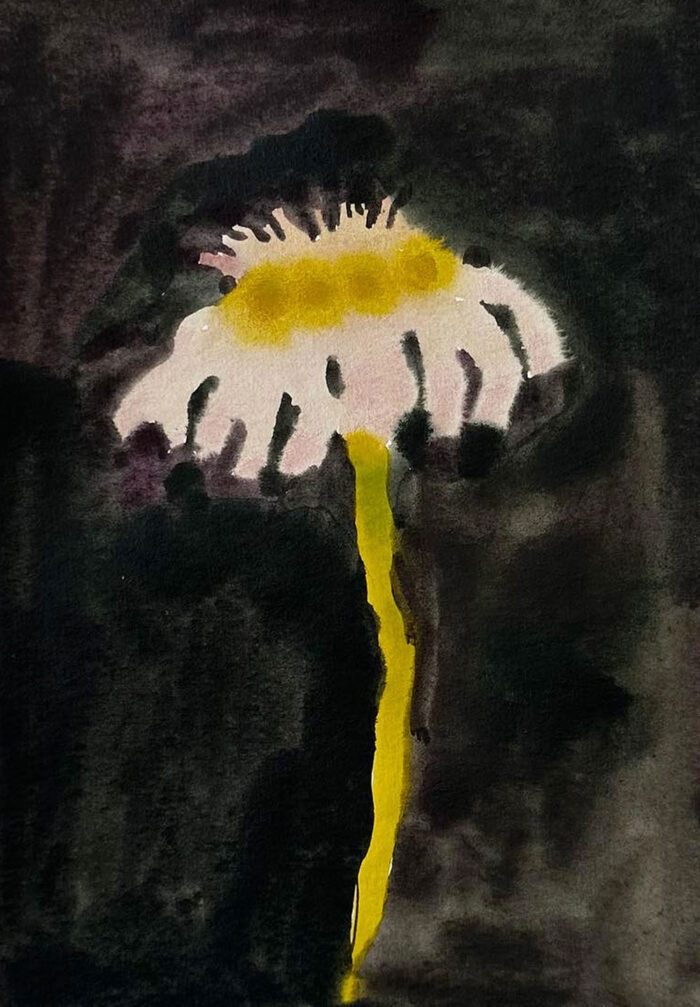
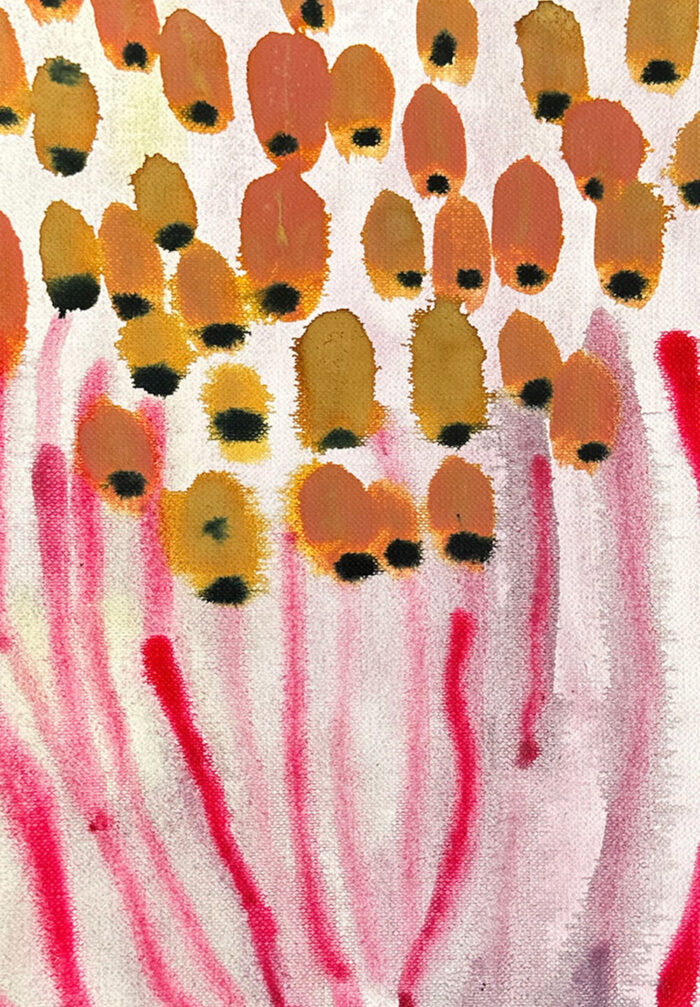
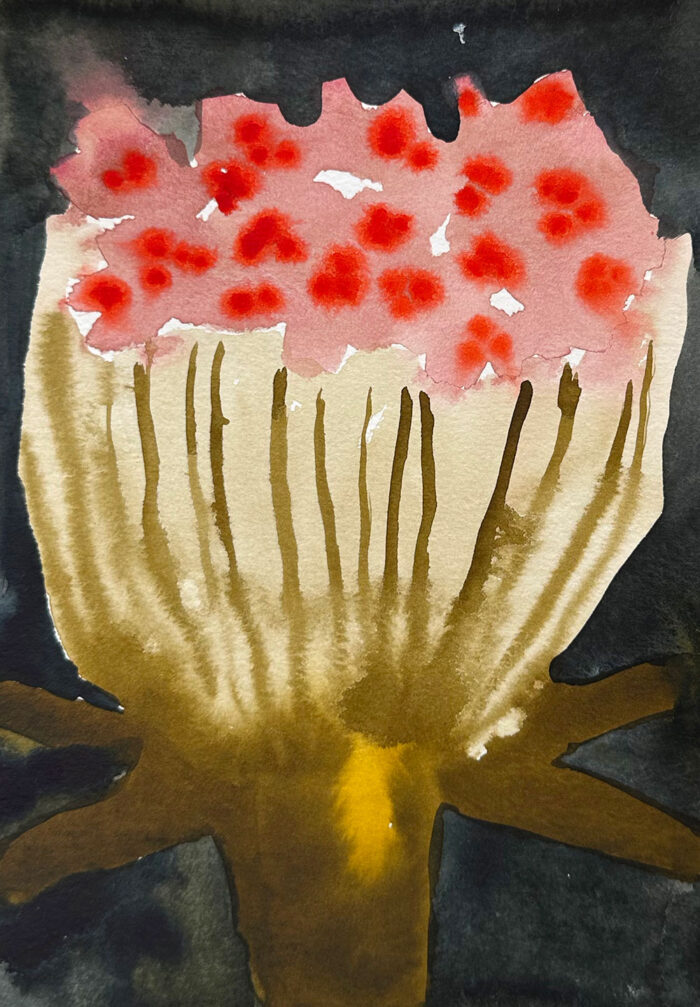
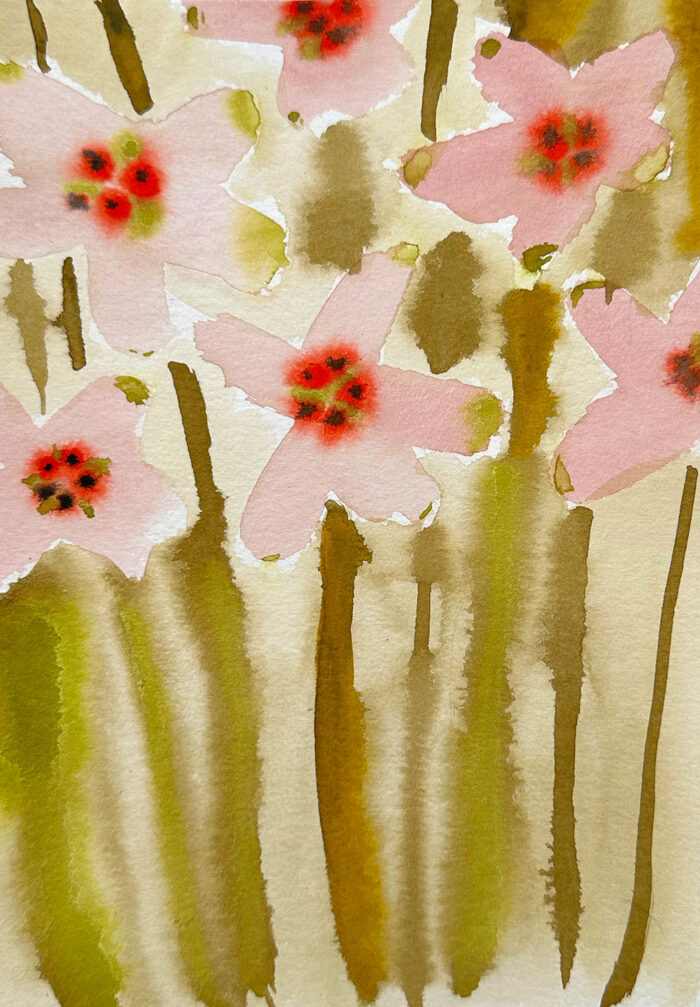
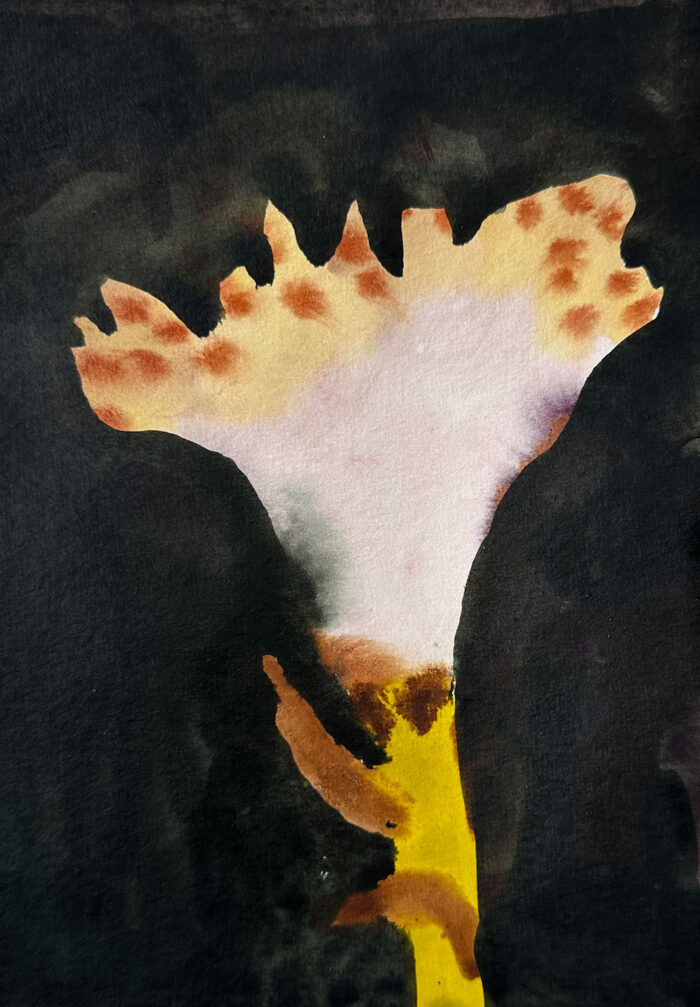
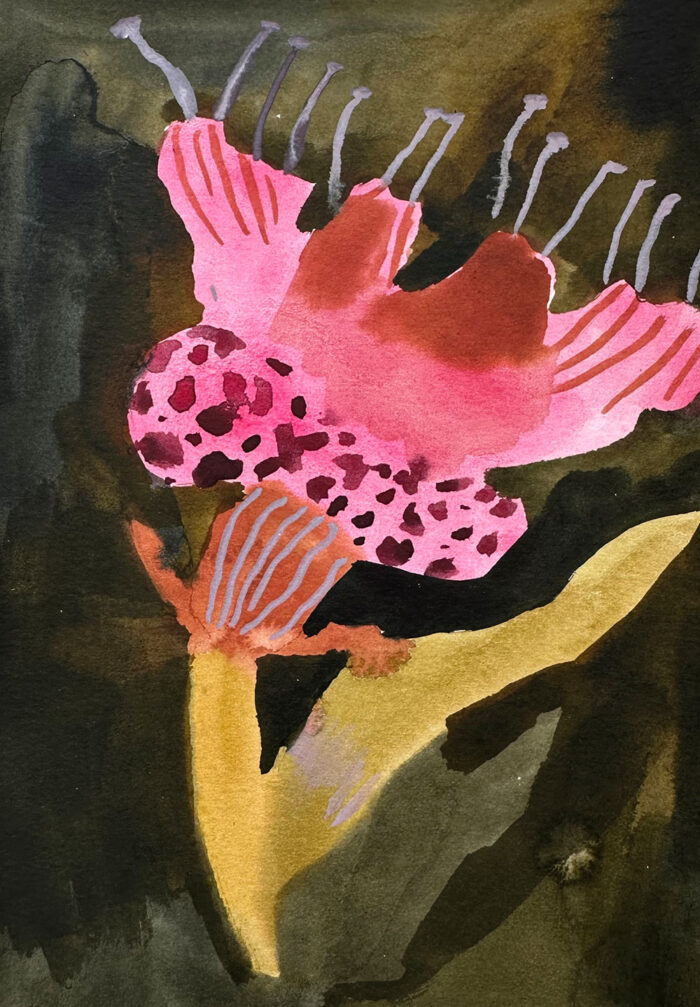
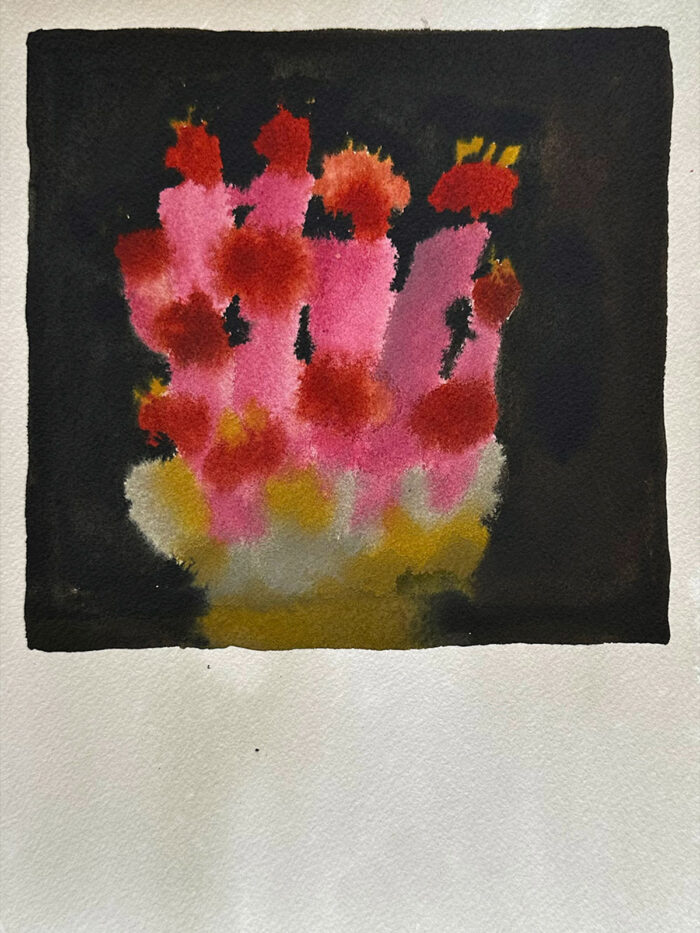
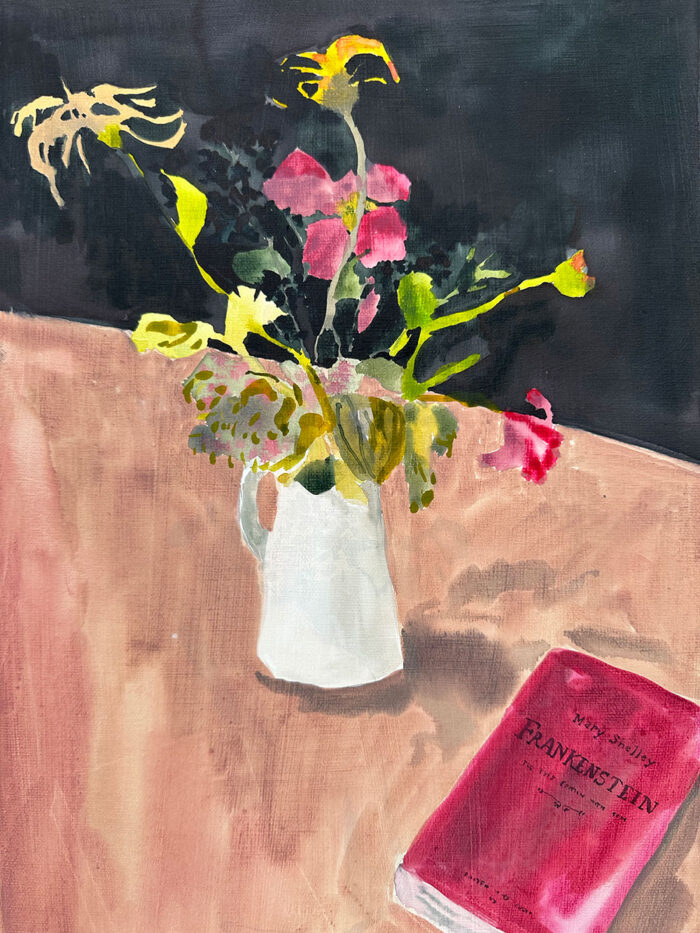
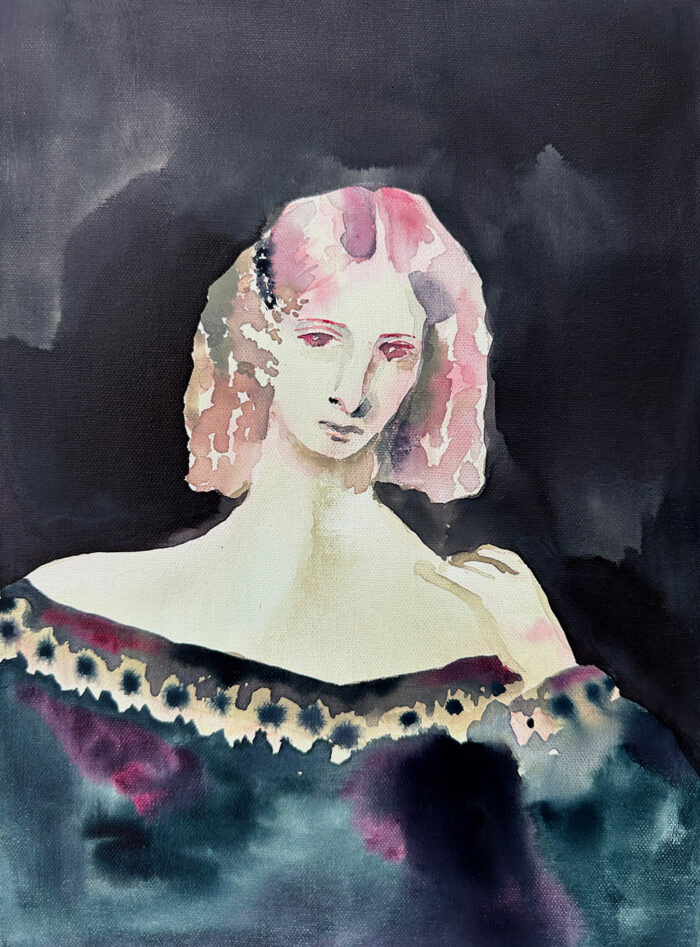
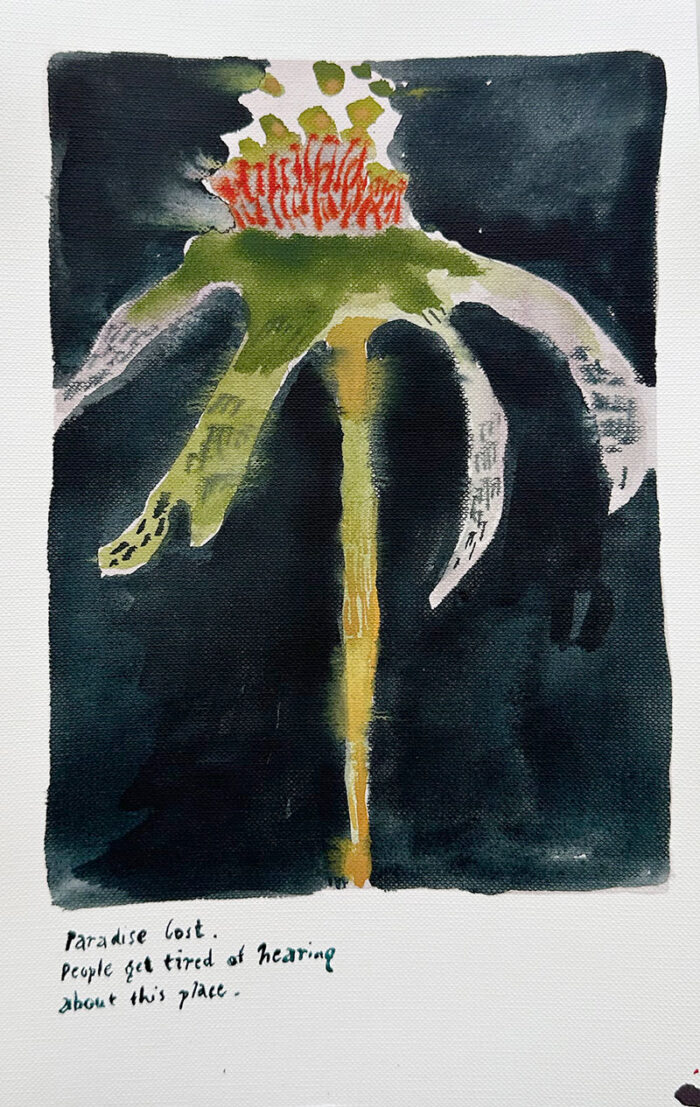
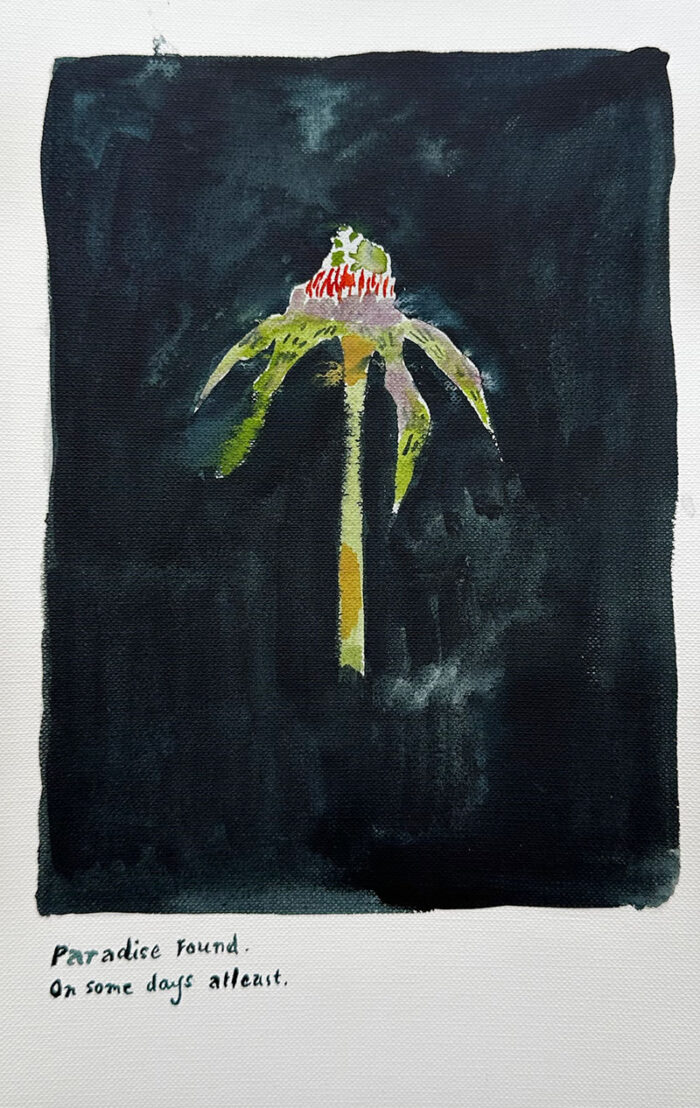
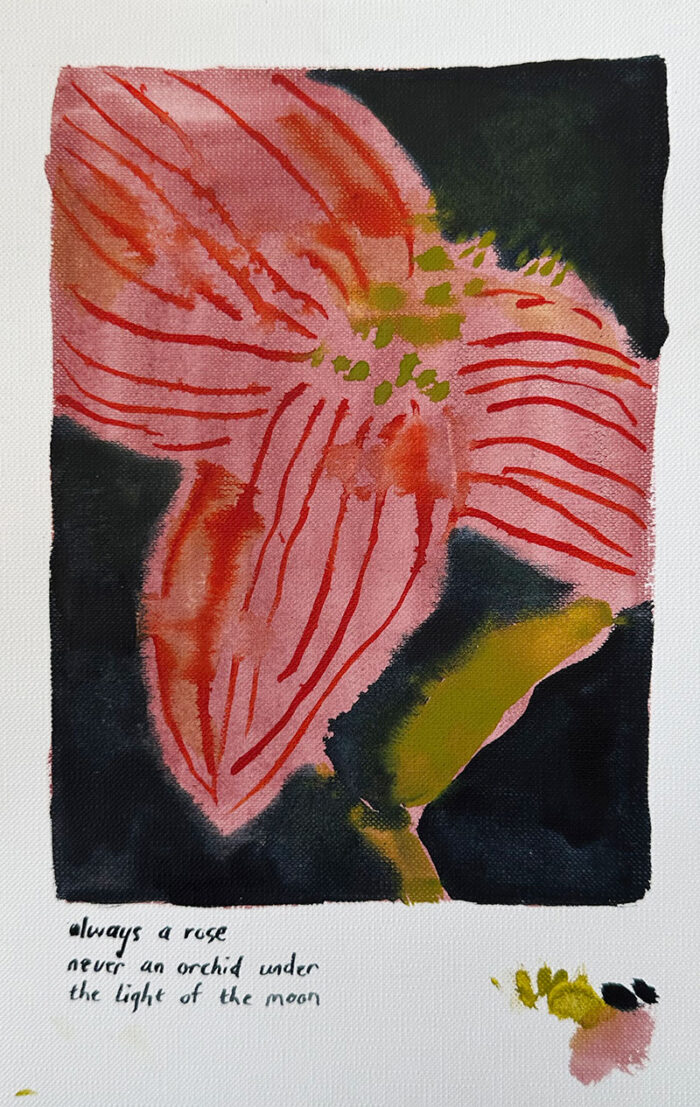
’as circular as hope’ is a solo exhibition by Ruschka du Toit who presents a season of recent works, mapping the progression of an internal winter making way for the nascent bloom of spring. In making this body of work, du Toit’s primary interest was in visualising emotion through intuitive, gestural expression; using her brush to externalise inner feelings onto canvas. In holding her explorative studies of emotive mark-making up to the light, a symbolic arc of healing and transformation is revealed, translated through nature’s enduring cycles of growth, decay, and metamorphosis.
Known for her use of flowers as a conduit for meaning, in ‘as circular as hope’ du Toit incorporates other messengers from the natural world: moths, shells, tornadoes. She’s drawn to her subjects serendipitously, often only learning their significance after the fact, finding uncanny links to her broader themes. “The more time I spend with them, the more meaning I discover in their symbolism, patterns and forms. Flowers teach me about the transience of life. Moths whisper secrets of transformation and a splendour often overlooked. The night becomes alive with mystery, reminding me that darkness, too, has its purpose.”
Du Toit prioritises conveying feeling over uniformity of medium; freeing herself to move through figuration and abstraction, drawing and painting, paper and canvas, oil stick and ink. Colours have been intentionally subdued but are no less charged; the supernatural darkening of an afternoon sky before a storm, the purplish green-yellows of a healing bruise. Like the undefined edges of emotions, inks are coaxed with water to bleed and stain, lines dissolve and reappear, colours change as if by alchemy. Du Toit flexes and releases control, leaving certain effects to chance…to hope.
Curiosity is paramount to du Toit’s practice; noticing, allowing, unfolding. “For me, there’s a spiritual depth in paying attention to what’s around us.” The show’s title is borrowed from Mary Oliver’s poem Spring, in which she describes observing a snake in her yard, leaving his winter cave in search of sun. In du Toit’s garden, hope is a flower: beautiful, persistent, radical, astonishing. It has to be, in order to pull us through inevitable winters when our bones forget that warm days will return.
Text by Alix-Rose Cowie